
A Mighty Five things Utah had to teach me.
I recently visited Utah’s Mighty Five with a tour group of about fifteen people whose ages ranged from thirty to eighty, which meant we had enough life experience on that van to be sensible, and just enough enthusiasm to ignore it.
There were four sets of sisters, including me and mine, on the trip. There was a young married couple, and older couples who were every bit as excited as the newlyweds, which I found encouraging. There was also a man named Jeff who was often late because of last-minute coffee runs, and after a while this no longer registered as a delay so much as part of the natural order.
We started with Zion and finished with Canyonlands just like Thelma and Louise going off the cliff at the nearby state park (true cinematic relevance there). And somewhere along the way, Utah saw fit to teach me a few things.
Zion: Live Bigger
We started with Zion, which is exactly the sort of place with which a trip like this ought to begin, because Zion does not gently ease a person into awe. It introduces itself like a place fully aware of its own magnificence.
Before we even entered the park, we stopped for Mexican food at what used to be an old Texaco station. I liked that immediately. There is something healthy about beginning a grand adventure with green chili enchiladas.
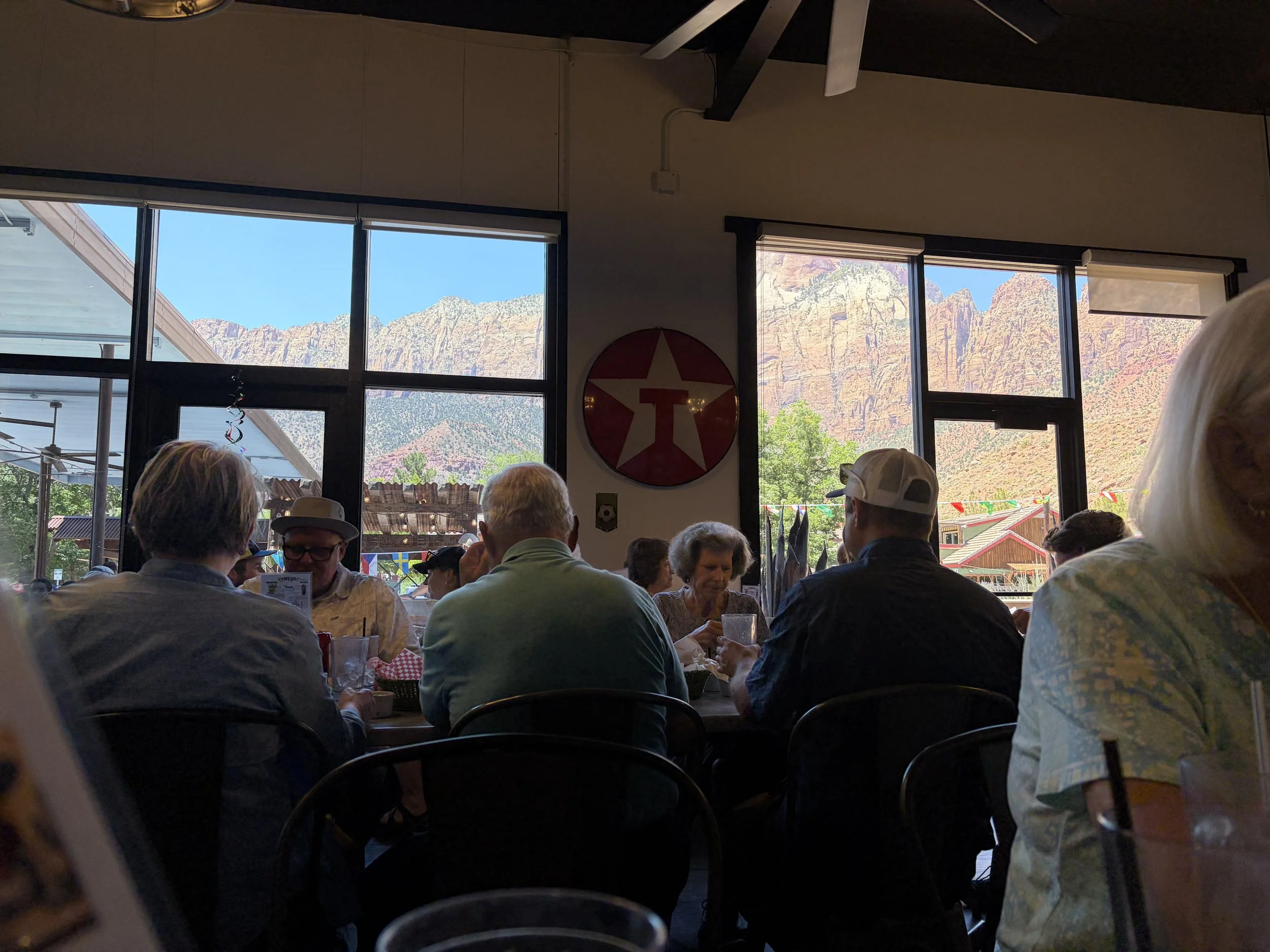
Then you begin climbing by road and elevation for us that is, and little by little Zion opens up in front of you until it becomes clear that small living was not invited.
Zion taught me to live bigger.
Not louder. Not busier. Not in the exhausting internet sense where “living bigger” appears to require a new planner, or a side hustle.
I mean bigger in spirit.
Bigger in your willingness to go. Bigger in your willingness to be moved. Bigger in your willingness to say yes to beauty before your practical mind can interrupt with a list of reasons why this might be inconvenient.
Zion does not strike me as a place with much patience for “maybe later.” It seems to suggest, quite firmly, that later is overrated and the view is right now.
Bryce Canyon: The World Is More Colorful Than We’ve Been Acting
Bryce Canyon does not believe in tasteful restraint.
It is all orange and pink and red and gold and cream, and not one inch of it appears worried that this might be too much. Bryce is not asking whether perhaps it should tone things down a touch for the sake of maturity.
Bryce Canyon would like a word with maturity.
The place looks like the earth had a successful collaboration with sunset and then decided to keep going.
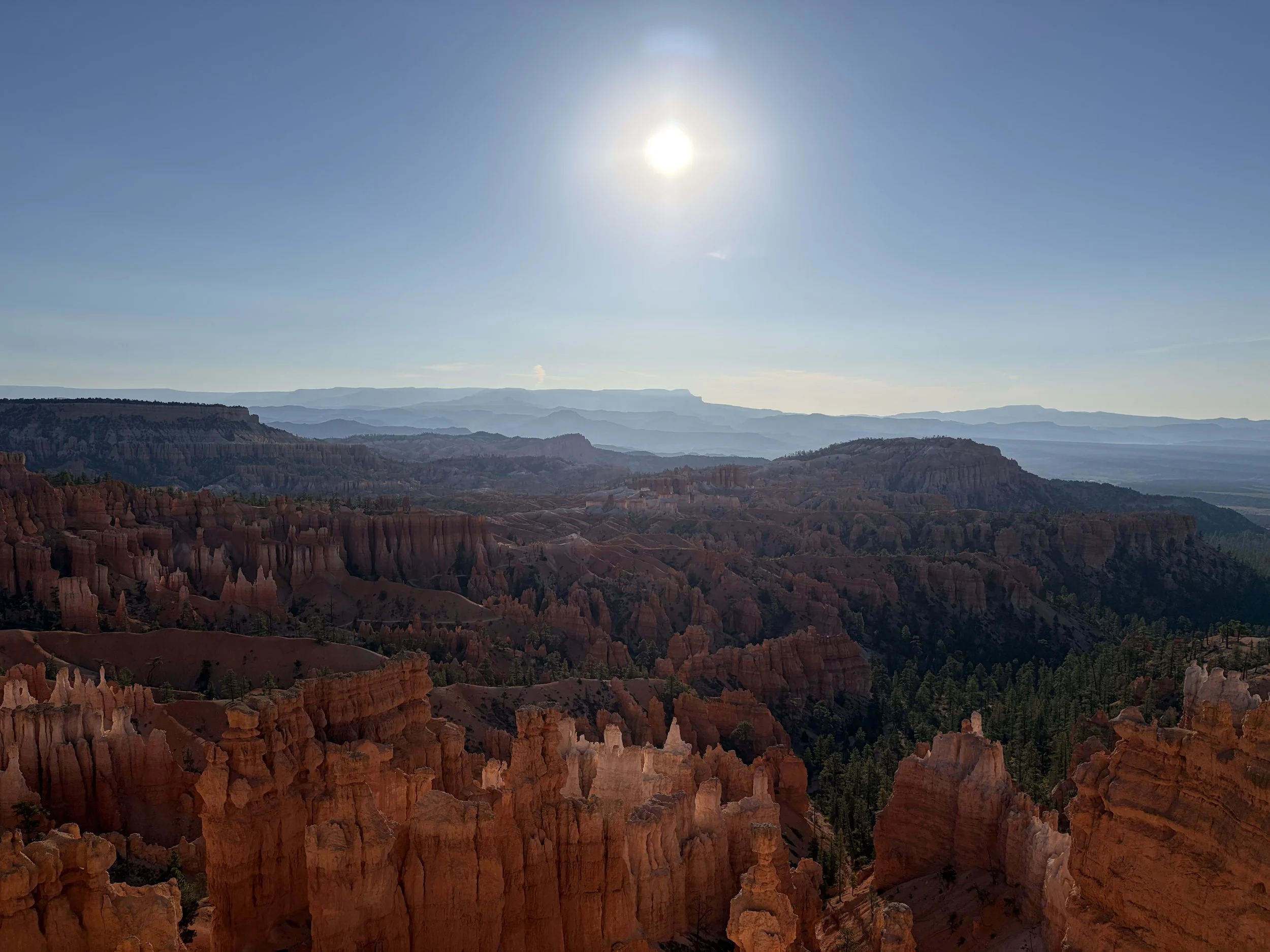
And standing there, it occurred to me how odd it is that so many adults spend years being quietly talked into a narrower, duller version of beauty than the world itself seems inclined to offer. Somewhere along the way, people begin acting as though color is unserious. Too playful. Too much. Too likely to suggest a person still enjoys things.
Bryce Canyon does not appear burdened by any of that.
It reminded me that color is not childish. It is energy. Personality. Mood. Evidence that the world is not trying to be forgettable.
Which may be why so many women keep saying, in one form or another, “I want color.” Not because they need louder things. Because they’re tired of living in beige interpretations of themselves.
Capitol Reef: Look Up and Find the Light
Capitol Reef may be the least famous of the five, which feels a little unfair, though every family has one sibling who is quietly excellent while the others get more attention (a nod to me and my sister).
It was also the only park where we saw pictographs, and that changed the feeling of the place for me. It reminded me just how many people had been there before us — people who were not carrying insulated water bottles, layered hiking snacks, and a phone full of maps.
There is something sobering about seeing marks left by people who moved through that land long before you ever arrived. It gives perspective. Not the cheerful, self-help kind. The real kind.
And then there were the white-topped domes, the ones that gave Capitol Reef its name because they reminded early travelers of capitol buildings. I kept thinking how useful that must have been. To be out there, needing direction, and to know what to look for.
It reminded me of learning to drive in Austin. I was always told that if I got lost, I should find the University of Texas Tower and drive to the Tower. Because I was raised a good Longhorn, I knew that if I could find the Tower, I could eventually find my way home.
That’s what Capitol Reef felt like.
A place that reminds you to look up.
To stop staring straight ahead like a person trying to survive the week for an empty inbox and instead lift your eyes high enough to let the landscape, the history, and the light help you get your bearings.
Capitol Reef taught me that sometimes direction does not arrive by overthinking.
Sometimes it arrives because you looked up.
Arches: The World Is More Interesting Than Whatever Netflix Has Planned for Me
By the time we reached Arches, I was already impressed with Utah, but Arches introduced a new angle on the matter.
Because on the way to Delicate Arch, there sits this old decaying house — Wolfe Ranch — in the middle of all that astonishing landscape. And maybe this says more about me than I intend, but standing there, looking at that old homestead tucked into one of the most dramatic places in the country, I found myself thinking that even decaying frontier real estate in a national park seems more interesting than a great deal of what modern life is offering us.
No offense to Netflix.
But Arches made the point rather forcefully that the world is more impressive than anything our entertainment industry can fabricate.
There is an old house in the middle of nowhere, near one of the most famous arches in the world, and somebody once lived there. Lived there. Not visited. Not tagged a photo and left. Lived there.
And all around it is a landscape so strange and improbable that it makes a person want to put the phone away and go look at something real.
Canyonlands: Shared Wonder Is Better
Canyonlands was the last park we visited, and it was my favorite.
Mostly because of the vastness.
Actually, entirely because of the vastness.
Canyonlands is so big it makes the rest of your vocabulary feel a little inadequate. It opens and stretches and drops away until words like beautiful and impressive begin to seem like they’ve been badly overused elsewhere.
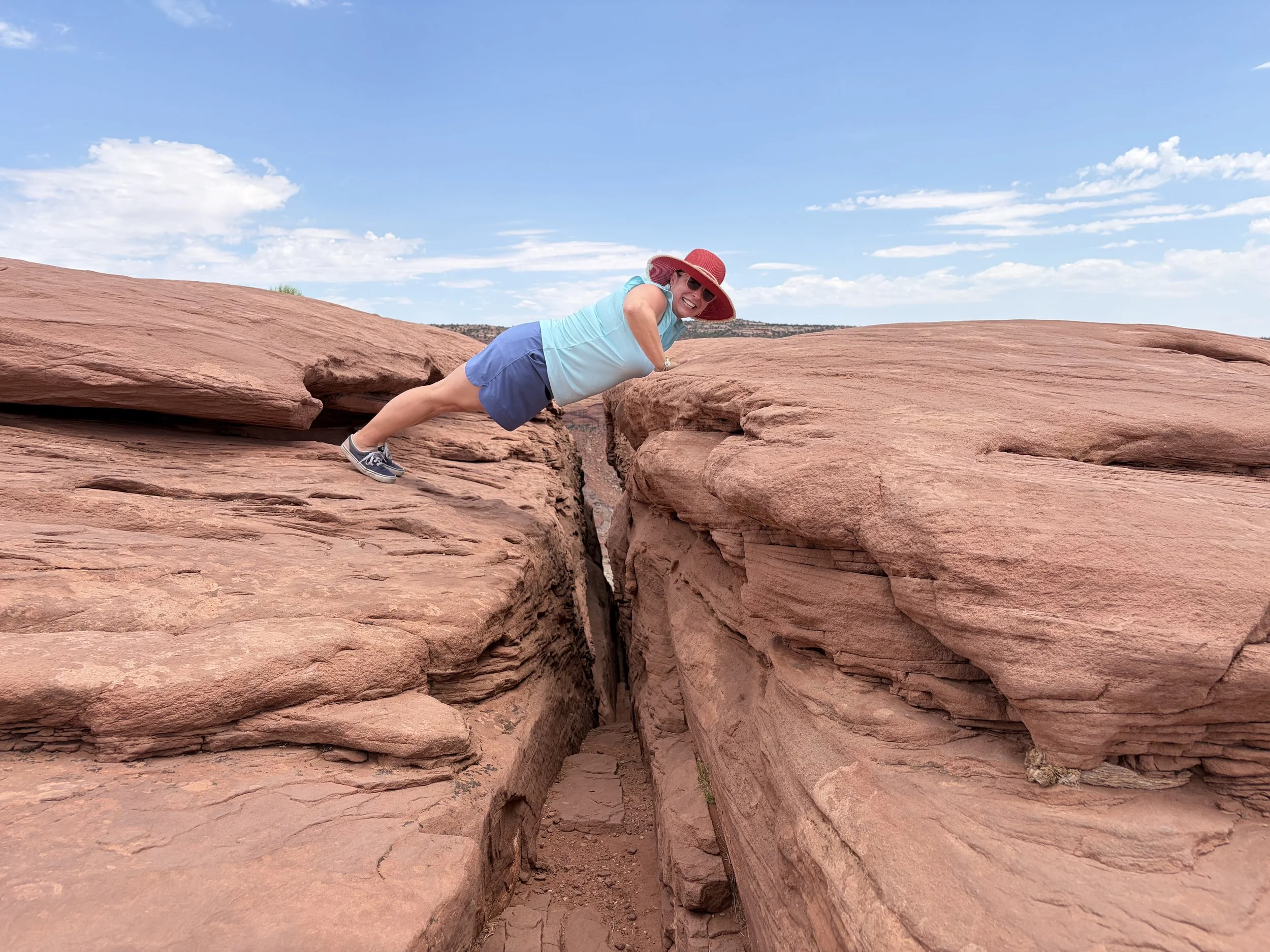
And because it was our last park, there was something bittersweet about it too. I knew the trip was winding down. I knew this parade of cliffs and canyons and giant geological declarations was nearly over. And I was very aware of how glad I was to have experienced it with my mom, my sister, and the new friends we had made because of this trip.
Canyonlands reminded me that wonder is good.
Shared wonder is better.
The Part I Brought Home
When I think about the trip now, I remember the parks, of course.
But I also remember the feeling that, for a little while, all of us had agreed to stop treating life like something to get through and start treating it like something worth showing up for.
That may be the real lesson from Utah.
Not that everyone should immediately go to the Mighty Five, though I would not discourage it.
Just that there is still an awful lot in this world to notice. More color. More scale. More history. More friendship. More beauty. More reasons to look up. More reasons to go. More reasons to let life feel larger than whatever is waiting for you in your inbox.
And perhaps that is what I am always after anyway.
Not more stuff.
More aliveness.
If you’ve been to one of the Mighty Five, reply and tell me which park stayed with you most.